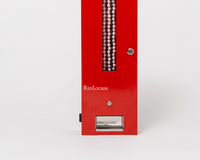
For the first time, international standards processes are beginning to address menstrual health as a workplace issue. RedLocker CEO Liza Eriksson explains what is happening, what it means for employers, and why this shift matters.
Q: Before we get into the ISO standards, let's start with a comparison you often make: access to toilet paper versus menstrual products in the workplace. Why is that conversation important?
Liza: Because it makes the double standard obvious. Every workplace stocks soap, hand towels and toilet paper. But menstrual products? They're still treated as something you should sort out before you leave home. That mentality isn't practical and it's outdated. We've inherited a hygiene standard that was designed for only half of the population. That needs to change.
Q: Two ISO processes are now underway that relate directly to this. What are they?
Liza: For anyone not familiar with ISO, think of it as the global rulebook for good practice. It's not law, but it's the benchmark that serious organisations, auditors and investors measure against.
Two things are happening right now. The first is ISO/TC 338, which is creating global quality and safety standards for menstrual products for the first time. That covers pads, tampons, cups and period underwear. None of these have ever had a unified global standard, which is remarkable when you think about it. More than 40 countries are involved, and the Swedish Institute for Standards, SIS, is leading the work.
The second is the proposed ISO 45010 guidance, which addresses menstruation, menstrual health and menopause in the workplace. It sits within the ISO 45001 family, which many companies already follow, and it is intended to guide employers toward developing real policies, making physical adjustments, and building a workplace culture where menstrual health isn't something people whisper about.
So one raises the bar for the products and the other for the workplace. Together, they aim to fill a gap that's been open for decades.
Q: The ISOs are guidance standards, not legislation. Will they actually matter?
Liza: ISO 45001 isn't legislation either, but try telling a multinational it doesn't matter. These standards become the language of compliance, ESG reporting, and procurement. Once menstrual health is formally addressed within an ISO framework, it becomes much harder to dismiss as a soft issue. That shifts the conversation in boardrooms, in audits and in tender processes.
Here in Sweden, where we already have the Discrimination Act and mandatory work environment management, the proposed ISO 45010 guidance would help define and structure what should arguably have been workplace practice all along.
Q: What does the data say about the impact when employers don't act?
Liza: In RedLocker's own survey data, 86% of women who menstruate have experienced an unexpected period at work or school. 56% find it stressful, and 40% have used toilet paper because they had nothing else available. Broader research suggests that access can reduce stress, improve comfort and support a more inclusive workplace experience. It's probably the highest-return workplace investment that most companies still aren't making.
Q: RedLocker is now in nearly 6,000 schools and workplaces across Northern Europe. What separates companies that get this right from those that don't?
Liza: It comes down to intent. The organisations that succeed see this as inclusion infrastructure. They involve their people, they communicate openly about it and they commit for the long run. The ones that struggle usually just want to check a box.
Q: Sweden is leading the product standards work. What does that mean for RedLocker?
Liza: Sweden has a strong track record on gender equality so it makes sense that SIS is leading the product standards work. For us it's very encouraging. It means the country where RedLocker was born is now helping set the global benchmark, and we're proud of our role in making this conversation difficult to ignore.
Q: What about the global picture? Period poverty affects hundreds of millions of people.
Liza: This is where standards really matter. Without them, product quality varies wildly between countries, and trade barriers keep better products from reaching the markets that need them most. The UN's Sanitation and Hygiene Fund reports that over 600 million women and girls in lower-income countries still use rags or other makeshift materials to manage their menstruation. TC 338 aims to create a shared framework that lowers barriers for manufacturers and gives regulators real tools to work with. Standards alone won't solve period poverty, but you can't build a functioning market without them.
Q: What would you say to an employer who hasn't considered this yet?
Liza: Don't wait for the standards to tell you what you probably already know. Look at your workplace hygiene checklist and ask yourself who it was designed for. The cost of including menstrual products is minimal and the impact on wellbeing, retention and inclusion is measurable. With international standards on the way, this is going to land on your desk whether you put it there or not. The only question is whether you choose to lead or follow.