Today, 28 May, marks International Menstrual Hygiene Day. For RedLocker, the day itself is a reminder that menstrual products are still too often deprioritised and seen as something extra, rather than a natural part of public infrastructure.
We live in a society where toilet paper, soap and water are considered basic. No one regards them as generous or calls them an inclusion initiative.
When it comes to menstrual products, we have accepted an entirely different standard. People who menstruate are still expected to carry the responsibility for something that is normal, recurring and entirely predictable. That is unequal, undignified and a failure for any society that claims to take gender equality seriously.
In a modern society, no one should have to leave school, work, training or a public space because there are no menstrual products in the toilet. Yet it still happens.
Free menstrual products in public environments are not a progressive idea. They are a reasonable minimum standard for any society serious about equality, working conditions, education and public health.
Nor is this difficult to implement. The infrastructure already exists. Menstrual products simply need to be available in the places where people already expect basic hygiene products to be provided.
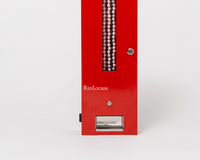
Since 2018, RedLocker has worked to drive this issue forward, installing more than 6,000 dispensers providing free menstrual products in schools, workplaces and public environments across the Nordics and wider Europe. Our solutions are available in more than 75 percent of Swedish upper secondary schools and in one in three companies on the OMX Stockholm 30.
The issue is now moving from the margins into the structures of society. The UN Human Rights Council has recognised access to menstrual products as part of basic human rights. ISO is also, for the first time in history, developing global standards for menstrual products, with Sweden playing a leading role through the Swedish Institute for Standards.
This is an important shift. Menstrual health can no longer be treated as a niche issue, a women’s issue or an individual responsibility. It is a matter of rights, working conditions, product standards and social responsibility.
RedLocker was founded on the simple conviction that menstrual products should be available where the need arises, without anyone having to go to reception, ask a colleague, feel embarrassed or explain themselves.
Free menstrual products are not charity or a symbolic gesture. They are basic infrastructure, and should be treated as such.
Liza Eriksson
CEO and Co-founder, RedLocker